How to Barter at a Swap Meet Without Being Weird About It
A practical guide to proposing trades, knowing what your stuff is worth in swap meet dollars, and walking away when a deal isn't there.
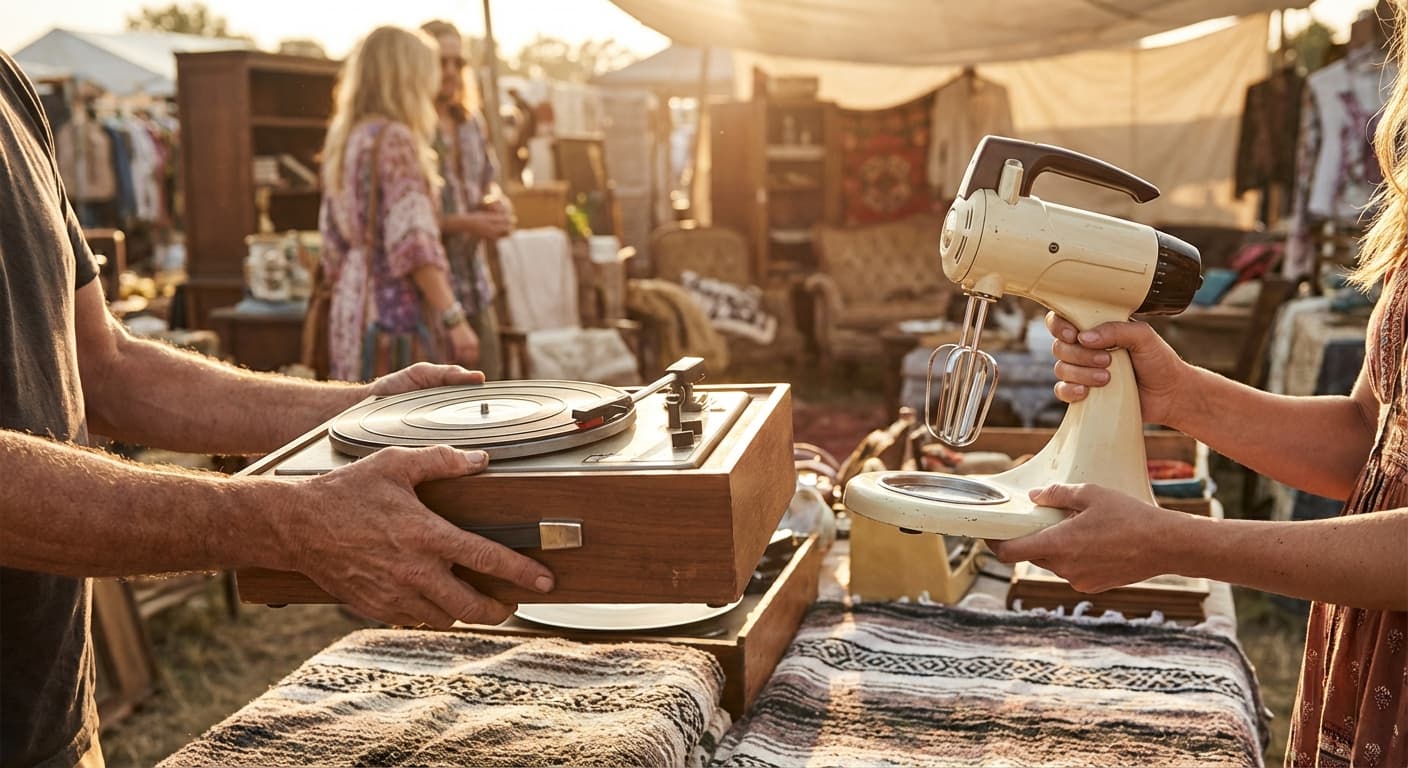
Bartering at a swap meet sounds simple until you're standing in front of someone's table holding a bread maker, trying to figure out if it's worth the same as their vintage record player. Most people default to cash because trading feels awkward. It doesn't have to be.
Know What Your Stuff Is Worth Before You Arrive
The easiest way to botch a trade is to overvalue your own items. That bread maker you paid $120 for? At a swap meet, it's worth about $15-20 in cash. So when you're trading, think in swap meet dollars, not retail dollars.
Before the event, sort your trade items into rough tiers:
- $1-5 tier: Paperbacks, basic kitchen tools, kids' toys without missing pieces, single pieces of clothing
- $5-15 tier: Small appliances that work, board games with all pieces, brand-name clothes in good shape, cookware
- $15-30 tier: Working electronics, quality tools, popular brand items, complete sets of anything
- $30+ tier: Furniture, high-end gear, collectibles, anything someone would search for specifically
You don't need exact numbers. You need to know that your $5-tier coffee mugs aren't a fair swap for someone's $20-tier stand mixer. Tiers keep trades honest without anyone pulling out a calculator.
How to Propose a Trade Without the Cringe
The hardest part of bartering is the opening line. "Would you trade for this?" works fine, but it puts all the pressure on the other person to evaluate your item on the spot.
A better approach: lead with what you want, then offer options.
"I love that lamp. I've got a few things I'd trade for it. Want to take a look?" Then bring them to your table or show them two or three items in a similar value range. Giving choices makes the other person feel like they're picking, not being sold to.
A few things that make trades go smoother:
- Trade up by adding cash. "I'll give you this plus five bucks for that" is a normal thing to say. Mixed trades happen all the time and solve the "not quite equal" problem.
- Don't argue value. If someone thinks their item is worth more than your offer, they're probably right from their perspective. Say "no worries" and move on. There are other tables.
- Bundle your side. Offering two or three smaller items for one bigger item often works better than one-for-one. The other person sees volume and feels like they're coming out ahead.
What Makes Good Trade Bait
Some items trade better than others, regardless of their cash value. (There's a lot of overlap with what sells best at swap meets in general.) Bring these if you have them:
- Tools: People always want tools. A decent set of wrenches or a working drill will trade for almost anything at a swap meet.
- Kids' stuff in the next size up: Parents at swap meets are shopping for the next size. If you have clean clothes, shoes, or gear in popular sizes (2T-5T, 6-8), someone wants them.
- Niche hobby items: Vinyl records, vintage video games, craft supplies, fishing gear. Collectors show up to swap meets specifically looking for these, and they'll trade generously to get them.
- Kitchen appliances that work: Instant Pots, stand mixers, food processors. Everyone wants one but nobody wants to pay full price.
The worst trade bait? Things with sentimental value to you but none to anyone else. Your kid's art projects. Novelty mugs. Books from obscure series nobody's heard of. If you wouldn't buy it at a thrift store, don't expect someone to trade for it.
When a Trade Isn't Working
Sometimes you and the other person just can't find a match. That's fine. More than fine.
The graceful exit: "I don't think we've got a match today, but good luck with the rest of the event." Nobody's feelings get hurt. You might circle back later when you've seen what else is available.
One pattern that works at bigger events: trade chains. You swap item A for item B at one table, then trade item B for the thing you wanted at another table. This sounds complicated, but it happens naturally. You browse, you notice opportunities, and by the end of the day you've turned a stack of old books into a kitchen appliance through three separate trades.
The best swap meet traders aren't aggressive negotiators. (If you're more of a buyer than a barterer, see our guide to finding the good stuff.) They show up with a variety of items, stay flexible, and treat every conversation like it might lead somewhere. Sometimes it does. Sometimes you just have a good chat and walk away.