What Thrift Stores Don't Tell You About Your Donations
Most donated clothes never get worn again. Swap meets cut out the middlemen and put your stuff directly into the hands of someone who wants it.
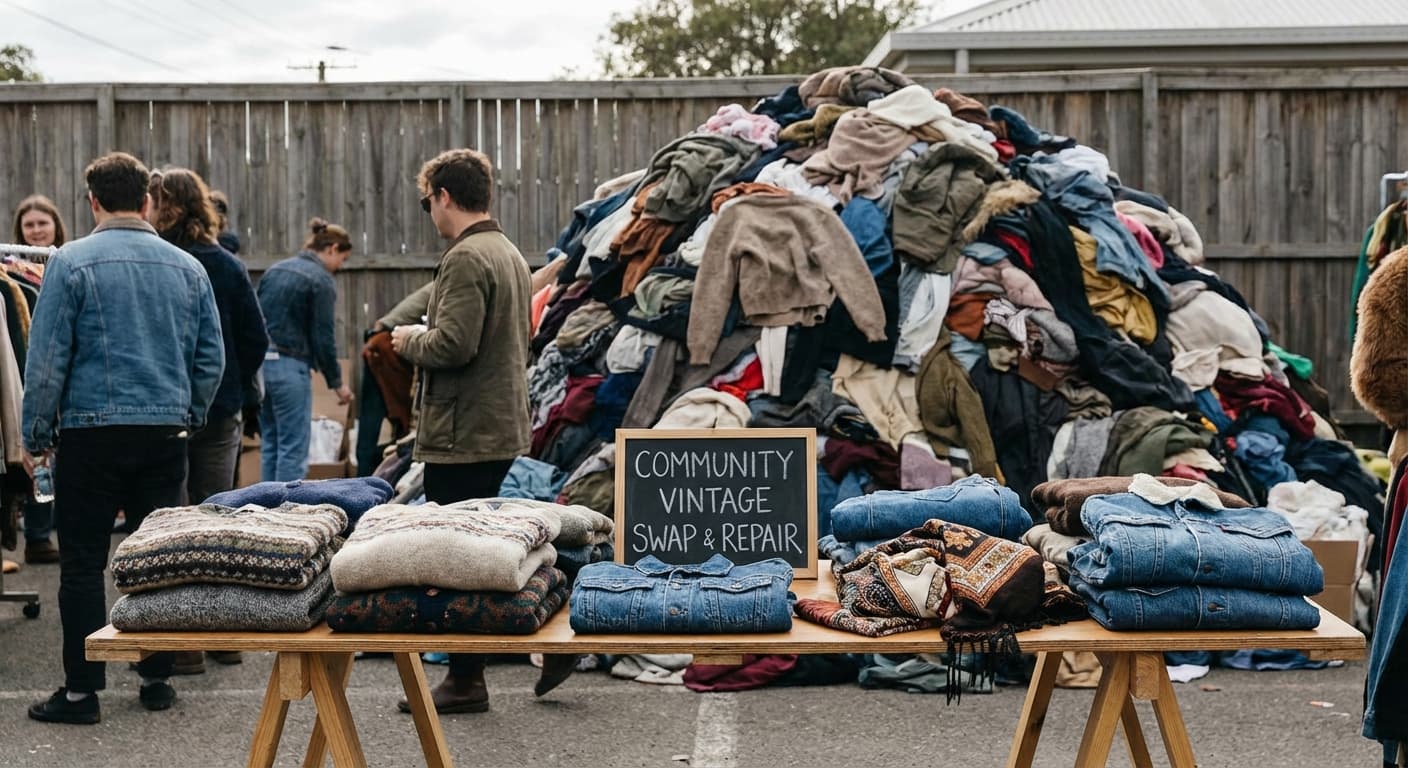
About 85% of textiles in the US end up in landfills each year. That includes the bag of clothes you dropped off at Goodwill last month feeling good about yourself. Thrift stores can only sell a fraction of what they receive. The rest gets baled up and sold to textile recyclers, shipped overseas, or thrown away.
This isn't a knock on thrift stores. They do important work. But if your goal is to make sure your stuff gets used by someone who wants it, a local swap meet does that more directly.
The Donation Pipeline Has a Leak
What typically happens to a bag of donated clothes:
- A volunteer sorts through it and picks out items in good condition that match what sells in that store
- Items that don't make the cut (stains, outdated styles, too much inventory in that category) go into a secondary stream
- That secondary stream gets sold by weight to textile processors
- The processors sort again. Some items get exported to developing countries, where they often undercut local garment industries. Some become industrial rags. Some get recycled into insulation or stuffing.
- A significant portion, especially synthetic fabrics that can't be easily recycled, ends up in landfills anyway
The donation bin gives you the feeling of being responsible. The swap meet gives you the reality of it. When you sell a jacket to your neighbor for $5 or trade it for a board game, that jacket has a new owner. Done. No middlemen, no shipping containers, no sorting facilities.
Swap Meets as Local Recycling
The environmental math is simple: every item that changes hands at a neighborhood event is one fewer item manufactured, shipped, and packaged new.
A swap meet with 15 participants can easily move 300-400 items to new homes in a single morning. That's 300-400 things nobody had to buy new. The footprint of the event itself is close to zero. Nobody drove to a warehouse. Nothing was wrapped in plastic. The items traveled a few blocks in the back of someone's car.
Some categories have an outsized impact:
- Kids' stuff cycles fastest. Children outgrow clothes, toys, and gear in months. A swap between five families with kids in different age groups can outfit each family's next season with almost no new purchases.
- Kitchen appliances are the most likely to sit unused. The average household has 2-3 small appliances they never touch. At a swap meet, those find people who will use them.
- Books are practically made for swapping. A book you've read once has zero value sitting on your shelf but full value to someone who hasn't read it yet.
Making Your Event Lower-Waste
If you're organizing a swap meet or a clothing swap and want to lean into the sustainability angle, a few choices make a big difference:
- Ban single-use bags. Ask participants to bring their own totes or reusable bags. Most people have a closet full of them. Mention this in your event details.
- Set up a repair station. A folding table with basic supplies: super glue, needle and thread, a screwdriver set. Minor fixes on the spot turn "never mind" into "I'll take it." A missing button is the difference between sold and skipped. (Need help with that? See our quick repair guide.)
- Plan the leftovers. The stuff that doesn't sell is the environmental crux of the whole event. If it goes to the curb on trash day, you've just delayed the landfill trip by a few hours. Instead: partner with a local charity for same-day pickup, or designate someone to do a thrift store drop-off that afternoon. Better yet, post the remaining items on your neighborhood's Buy Nothing group.
- Skip the printed flyers. A group text and a social media post reach more people than paper stapled to telephone poles. And you don't have to go collect soggy flyers the following week.
The Bigger Picture Is Small
The environmental argument for swap meets isn't about saving the planet in one Saturday morning. It's about building a habit. When your default response to "I don't need this anymore" shifts from "trash it" to "bring it to the next swap," you start thinking differently about what you buy in the first place.
People who swap regularly buy less new stuff. Not because they're on some anti-consumption mission, but because they know they can find what they need secondhand at the next event. That shift happens one neighborhood at a time.